Update on My Forthcoming Zen Book

June 28, 2021
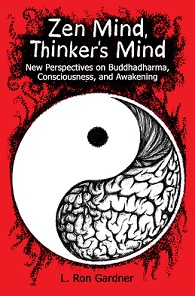
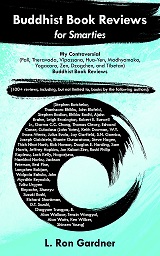
I finished writing and editing this book 3 months ago. I had a cover done, and then, through Fiverr, paid a person to lay out the manuscript for publication. But that person, and two others I tried thereafter, failed to properly get the job done. In the meantime, I finished putting together (but not editing) my ebook "Buddhist Book Reviews for Smarties." So my plan now is to finish editing "Buddhist Book Reviews for Smarties," publish it as a Kindle ebook, then devote myself to getting my Zen book (which will be a paperback as well as a Kindle) ready for publishing, then published.

Getting "Buddhist Book Reviews" published first makes sense, because the book contains reviews of books I refer to in my Zen book (and my forthcoming Dzogchen book). Once I find a competent, reasonably priced lay-out person for my Zen book, I can then have this person also lay out my Dzogchen book, which like my Zen book, I've finished writing and editing.… Read the full article

Dark Buddhism

November 18, 2020
[Note: This is an excerpt from my forthcoming book, “Zen Mind, Thinker’s Mind.” I had planned to publish the book this month, but when the layout person did a poor job, which I rejected, and I subsequently decided to make a some changes to the manuscript, I decided to push back the publishing process until January.]

Dark Buddhism: Integrating Zen Buddhism and Objectivism is a book by Morgan D. Rosenberg that seeks to reconcile Zen Buddhism with Ayn Rand’s Objectivism. While I respect Rosenberg’s effort, I have little regard for his “Dark Buddhism,” because his grasp of Buddhadharma does not exceed a pop Zen level, and he fails to creatively and esoterically integrate Zen and Objectivism. Below is my review of Rosenberg’s book (which was originally posted at Amazon, and then deleted by Amazon along with the rest of my 300-plus book reviews). My review summarizes my criticism of his Dark Buddhism, but rather than just criticize his book, I decided to also describe my vision of Dark Buddhism, the description of which follows my review.

My Review of Dark Buddhism

The author of this book, physicist Morgan D.… Read the full article

The Emptiness of Emptiness

August 5, 2020
For a three-year period in my life—1974-1976—I was deeply into the Prajnaparamita Sutras. My spiritual practice during this period focused on two things: developing a mind that dwelled upon nothing, and seeing all things as empty. But then, thanks to the teachings of Adi Da Samraj (then known as Bubba Free John), I had an epiphany: I realized that my attempts to develop a non-abiding mind and to negate phenomenal reality by imagining it as empty were simply forms of the avoidance of relationship (or whole-body communion with the Whole).

After my epiphany, I continued, for a few years, to randomly attend sittings at Zen groups, but I no longer had an interest in Zen philosophy and its apotheosis of emptiness. I basically forgot about the emptiness Dharma until 2003, when a friend introduced me to the teachings of Ayn Rand, which not only enlightened me on emptiness, but also inspired me to study academic texts on the subject by Buddhism professors. As I read these texts, which typically explain emptiness philosophy in the context of Nagarjuna’s Madhyamaka, I further refined my consideration of the subject, and I knew it was just a matter of time until I wrote on it.… Read the full article

Buddhist Politics 501

July 7, 2020
[Note: This is a chapter excerpted from my book "Zen Mind, Thinker's Mind: New Perspectives on Buddhadharma, Consciousness, and Awakening."]

According to the Pew Research Center’s party affiliation among Buddhists by political ideology survey in 2014 (http://www.pewforum.org/religious-landscape-study/compare/political-ideology/by/party-affiliation/among/religious-tradition/buddhist/), 12% of American Buddhists identify themselves as conservatives, 32% as moderates, 54% as liberals, and 2% “don’t know.” There is little reason to doubt the veracity of this survey because other such surveys provide similar results.

Left-wing Buddhists not only outnumber right-wingers by more than a 4/1 ratio, but many of them are now devoted to combining Buddhism with a “progressive” political agenda. At his blog Hardcore Zen (hardcorezen.info), Brad Warner comments on this phenomenon:

"What bugs me is when it appears that liberal, left-leaning Buddhists are trying to mix Buddhism with their political agenda in precisely the same way people like Pat Robertson mix Christianity with their conservative political agenda.… Read the full article

Introduction to “Zen Mind, Thinker’s Mind”

July 7, 2020
[Note: I have finished writing and editing my new book "Zen Mind, Thinker's Mind." I will begin the process of preparing the cover and lay-out, and when that is done, it will be self-published. This book took months longer than I had anticipated to write and edit, because I kept adding material, and it took me at least 15 read-throughs to work out the "glitches." But I'm very happy with the final manuscript. Here's the Introduction, so you know what to look forward to when it becomes available.]

In 2018, I decided that my next writing project would be a Buddhist “trilogy” consisting of texts on Dzogchen, Zen, and Pali Buddhism. I was motivated to undertake this project because I believe that Buddhism is in need of an “upgrade.” As I see it, there isn’t a single living Buddhism teacher or writer who has “cracked the code” and is able to properly elaborate on Buddhadharma, Consciousness, and Awakening. Given my view of the “fallen state” of Buddhism and my belief in my ability to “resurrect” it, I began my project.

I started my “trilogy” with the Dzogchen text, but at the point I was half-done writing it, a series of epiphanies convinced me to put it aside and instead focus on this Zen text.… Read the full article