The Case Against Donald Hoffman

November 12, 2025
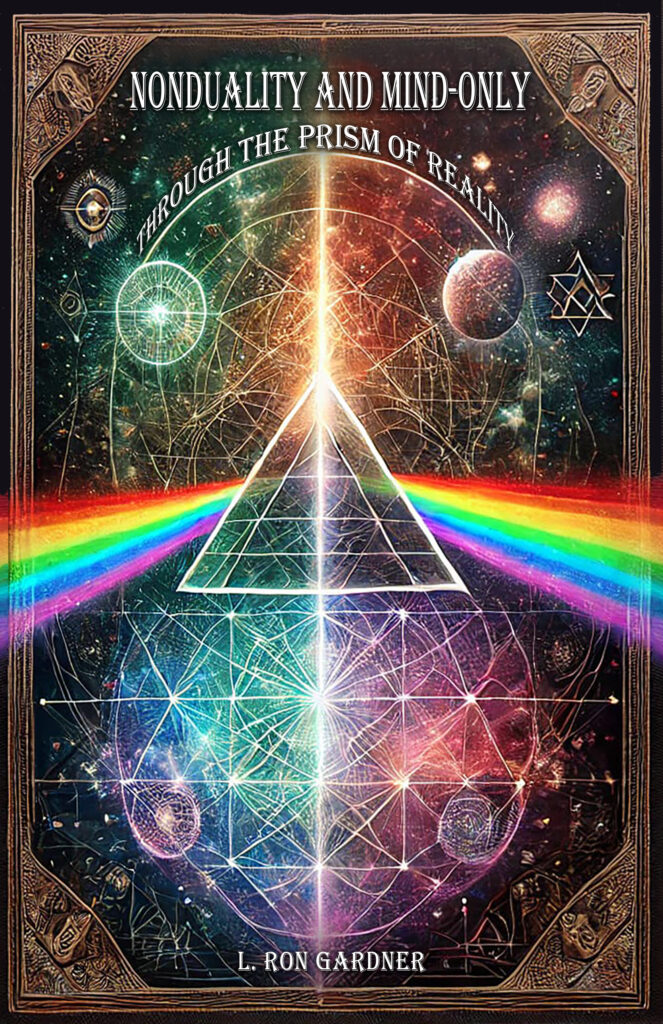
[This is an excerpt from my recently published book, Nonduality and Mind-Only through the Prism of Reality, which is available in Kindle and paperback at Amazon and from other book sellers.]

As delusional as Bernardo Kastrup is about reality, Donald Hoffman, UC Irvine professor of cognitive psychology, is perhaps even more so. Together, these two leading academic “lights” on quantum-crapola idealism have become uber-popular icons for those who worship at the altar of anti-reality.


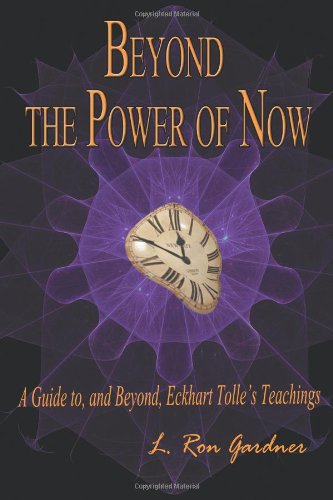
To those in the know, the first evidence that Hoffman is philosophically challenged is his adoration of fogged-out pop guru Eckhart Tolle, his primary spiritual influence. If Hoffman didn’t live in a spiritual-intellectual bubble, he’d know about and have read my book Beyond the Power of Now: A Guide to, and Beyond, Eckhart Tolle’s Teachings, which not only deconstructs the rampant poppycock permeating Tolle’s magnum opus The Power of Now, but presents spiritual Dharma on a level a quantum leap beyond Tolle’s text.


In addition to his infatuation with Tolle, Hoffman also vibes with A Course in Miracles, a second-rate quasi-Christian mysticism course that should be titled “A Course in Spiritual Trash,” which anybody steeped in real Christian mysticism would toss into a garbage bin or donate to a local Goodwill store.
Read the full article

“Nonduality and Mind-Only through the Prism of Reality” Is Now Available (in Kindle and paperback at Amazon, and from other book sellers)

September 24, 2025

INTRODUCTION


The Story of This Book

After completing and publishing Zen Mind, Thinker’s Mind and Radical Dzogchen in 2022, I decided that my next writing project would be a Kabbalah book. While beginning work on it, I found myself spending my free time watching YouTube videos on nonduality and Mind (or Consciousness)-Only idealism. This inspired me to read some contemporary books on these subjects. In short, neither the books nor the YouTube videos impressed me; so I decided to put my Kabbalah book on hold and first write Nonduality and Mind-Only through the Prism of Reality.

Because the Mind-Only idealism that I subscribe to involves explaining emanation and creation, I knew that I’d be able to integrate my seminal Kabbalistic insights into my thesis and paradigm, effectively killing two birds with one stone. I also knew that by adding Kashmir Shaivism metaphysics and Hegelian phenomenology of Spirit to my paradigm, I would be able to provide a unique and profound description of the “prismatic” intermundia between unmanifest Mind, the Supreme Source (of emanation and creation), and the terrestrial world we humans inhabit.… Read the full article

Kashmir Shaivism: The Involution of Ultimate Reality

July 17, 2024

[This is an excerpt from my forthcoming book Nonduality and Mind-Only through the Prism of Reality.]

The tantric tradition of Kashmir Shaivism (KS), per the late eminent Hindu scholar Jaideva Singh (1893-1986), “is the culmination of Indian thought and spirituality.” In contrast to Advaita Vedanta (which many, mistakenly, consider to be the foremost nondual yogic tradition), KS considers Maya (phenomenal reality) to be real, rather than an indeterminate illusion. Because Advaita Vedanta regards manifest existence as unreal, its “nonduality” does not qualify as true nonduality.

Since it is beyond the scope of our discussion to provide a comprehensive elaboration of KS, I suggest that those interested in the tradition refer to my Spiritual Reading List [in the back of this book] for recommended texts on the subject. That said, I hope that our consideration of the KS tradition provides a sufficient and unique explanation of its schema, both before and after the manifestation of the “rolled out” universe.

The KS schema or system consists of 36 tattvas (constituents or principles) which provide a map [see Diagram 1] of unmanifest Reality’s descent into, and through, the manifest dimensions of Maya.Read the full article

Beyond The Phenomenology of Spirit, Part 1

June 26, 2024
[This is an excerpt from my forthcoming book Nonduality and Mind-Only through the Prism of Reality.]

Hegelian Idealism and Dialectic

You’ve now considered nonduality and Mind-Only in the contexts of Yogacara (Lankavatara Sutra), Zen (Huang Po), Kashmir Shaivism, and Kabbalah. What’s left for you to complete your considerations?

As I stated at the end of our Kabbalah discussion, Hegel is next on our agenda. After Hegel, I’ll then seek to tie together the different schools of thought that we’ve considered. The end product might be less than satisfactory, but it will be fun to see what happens when we attempt to integrate these various perspectives. Independent of this synthesis attempt, I’ll then critique some of the prominent current voices on nonduality and Mind-Only.

Hegel, considered by many to be the most important philosopher since Kant, was a theologian devoted to philosophy as a means to disseminate gospel on God’s work in the world. In a lecture, he preached: “Philosophy has no object but God and so is essentially rational theology and, as the servant of truth, a continual divine service.”… Read the full article

Igor Kufayev and Vedic Astrology

June 4, 2024
[In a recent YouTube video, prominent spiritual teacher Igor Kufayev strongly recommends Vedic astrology. As a former professional astrologer, I reject Vedic astrology, and the following excerpt from my forthcoming book Nonduality and Mind-Only Through the Prism of Reality explains why I reject it.]

Combining the Kashmir Shaivism tattva system with the classical Sefirotic/astrologic Tree of Life clearly serves to upgrade the Tree as a theosophical chart. That said, I’m sure many traditionalists will recoil in response to my “creative” redrawing of the Kabbalistic Tree.

I’m also sure that many into Hindu Vedic astrology will not be happy with my rejection of the sidereal (mutable constellation-based) zodiac they embrace, and my allegiance to the tropical (immutable solar-system-based) zodiac, which most Western astrologers endorse. Here [below] for those who will be reading our exchange, is a brief comparison of the two zodiacs (excerpted from the article “Sidereal and Tropical Zodiacs” at universallifechurch.org):

Both sidereal and tropical zodiac systems typically use the same 12 astrological signs, with the Sun taking 30 to 31 days to transit each sign.… Read the full article