Igor Kufayev and Vedic Astrology

June 4, 2024
[In a recent YouTube video, prominent spiritual teacher Igor Kufayev strongly recommends Vedic astrology. As a former professional astrologer, I reject Vedic astrology, and the following excerpt from my forthcoming book Nonduality and Mind-Only Through the Prism of Reality explains why I reject it.]

Combining the Kashmir Shaivism tattva system with the classical Sefirotic/astrologic Tree of Life clearly serves to upgrade the Tree as a theosophical chart. That said, I’m sure many traditionalists will recoil in response to my “creative” redrawing of the Kabbalistic Tree.

I’m also sure that many into Hindu Vedic astrology will not be happy with my rejection of the sidereal (mutable constellation-based) zodiac they embrace, and my allegiance to the tropical (immutable solar-system-based) zodiac, which most Western astrologers endorse. Here [below] for those who will be reading our exchange, is a brief comparison of the two zodiacs (excerpted from the article “Sidereal and Tropical Zodiacs” at universallifechurch.org):

Both sidereal and tropical zodiac systems typically use the same 12 astrological signs, with the Sun taking 30 to 31 days to transit each sign.… Read the full article

Dharma, Dharmakaya, Dharmadhatu, Dharmamegha, and Dharmata

April 29, 2024
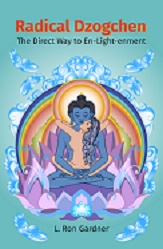
[This is an excerpt from my book Radical Dzogchen: The Direct Way to En-Light-enment, which is available in Kindle and paperback at Amazon, and from other book sellers.]

Can you clarify the definitions of Dharma, Dharmakaya, Dharmadhatu, Dharmamegha, and Dharmata?

Dharma, when capitalized, means the True Condition of a thing. When not capitalized, dharma means a thing or existent. Dharma, when capitalized, is also a synonym for Truth Teaching. Hence, the Dharma, or Doctrine, taught by Gautama was about realizing the True Condition of Reality, Nirvana.

The Dharmakaya is the Truth, or Reality, “Body,” or Dimension. It is timeless Awareness, or Mind, the ineffable Self-Existing, Self-Conscious “Substance” underlying and transcending all dharmas, or things. When the Dharmakaya is referred to as the “basic space of phenomena,” it is called the Dharmadhatu. But Dzogchen errs when it conflates the Dharmadhatu with space; for, in reality, the “space” in which phenomena arise is spaceless as well as timeless. Hence, Dharmadhatu is simply the term for the Dharmakaya as spaceless Awareness, the universal Context of all content, or phenomena.… Read the full article
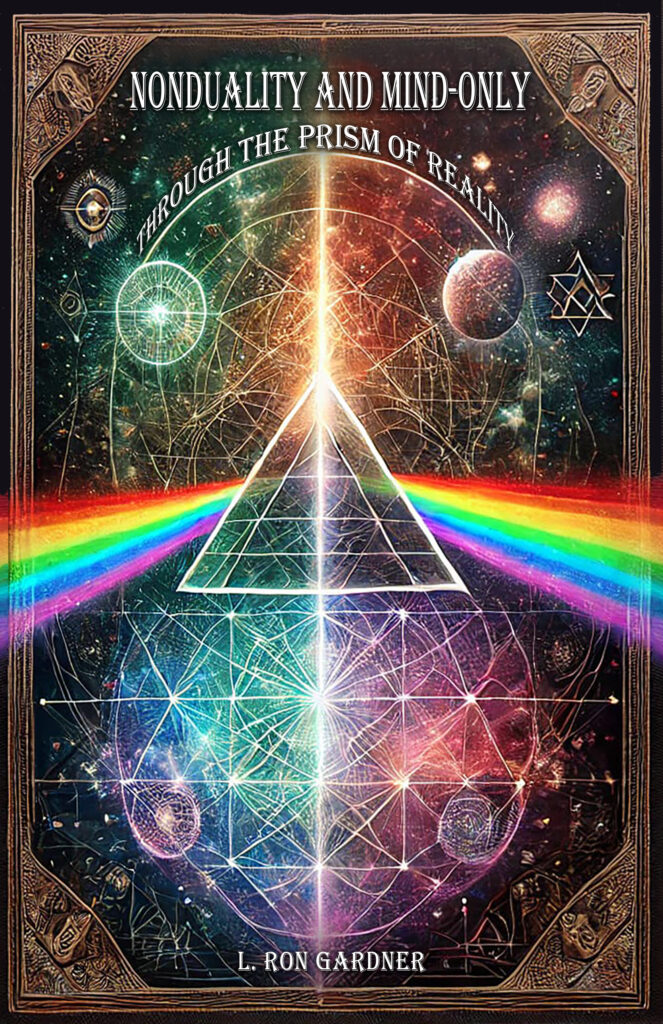
Introduction to Nonduality and Mind-Only through the Prism of Reality

April 22, 2024
Introduction

The Story of This Book


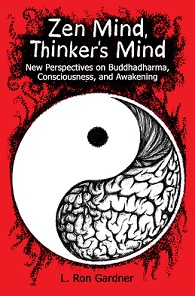
After completing and publishing Zen Mind, Thinker’s Mind and Radical Dzogchen in 2022, I decided that my next writing project would be a Kabbalah book. While beginning work on it, I found myself spending my free time watching YouTube videos on nonduality and Consciousness (or Mind)-Only idealism. This inspired me to read some contemporary books on these subjects. In short, neither the books nor the YouTube videos impressed me; so I decided to put my Kabbalah book on hold and first write Nonduality and Mind-Only through the Prism of Reality.


Because the Mind-Only idealism that I subscribe to involves explaining emanation and creation, I knew that I’d also be able to integrate my seminal Kabbalistic insights into my thesis and paradigm, effectively killing two birds with one stone. I also knew that by adding Kashmir Shaivism metaphysics and Hegel’s phenomenology of Spirit to my paradigm, I would be able to provide a unique and profound description of the “prismatic” intermundia between unmanifest Mind, the Supreme Source (of emanation and creation), and the terrestrial world we humans inhabit.… Read the full article

Contents of My Forthcoming Book: Nonduality and Mind-Only through the Prism of Reality

April 16, 2024


CONTENTS 


Introduction ………………………………………………………………………………………
The Story of This Book ………………………………………………………………………
Summary of This Book……………………………………………………………………..

Notes to the Reader …………………………………………………………………………

Tree of Life Figures……………………………………………………………………………

Chapter One: Nonduality and Mind-Only …………………………………………

Chapter Two: Reality and reality ……………………………………………………..

Chapter Three: Huang Po and the One Mind …………………………………..

Chapter Four: The Lankavatara Sutra and the One Mind
Descent into Lanka……………………………………………………………………….
Mind Versus mind………………………………………………………………………..

Chapter Five: Kashmir Shaivism: The Involution of Ultimate Reality….

Chapter Six: The Perversion of Kashmir Shaivism’s Mind-Only…………. Doctrine……………………………………………………………………………………………
     My Critique of Christopher Wallis’s KS Teachings ……………………………
My Review of The Recognition Sutras (by Christopher Wallis) …………
     Sadhguru, Another Perverter of Tantric Shaivism …………………………….

Chapter Seven: Kabbalah: Descent of the Divine through the Four Worlds…
     Kabbalah Beyond Judaism ……………………………………………………………….… Read the full article

Camatkara: The Hidden Path (Igor Kufayev)

April 11, 2024
[My 4-star review of Camatkara: The Hidden Path by Igor Kufayev.]

This book, by spiritual teacher Igor Kufayev, was sent to me to review by someone who values my opinion. Because it is a short book--130 pages--I decided to read it twice before reviewing it. In short, this book is an interesting and worthwhile read, even though it is teeming with statements I find problematic. Because it’s a unique, copacetic, and informative read, I’d give it 4 stars on a 5-star rating scale.

I’ll start my review with “the bad” in the book, then cite “the good,” and conclude with a summary.

THE BAD

Kufayev writes: “This is Camatkara—the perpetual sense of wonder. It is the delight that rises spontaneously from the void of the heart, from the core of our being, whenever and wherever we behold beauty in any of its forms. Therefore seek beauty and you will find God.”

Why is the title of the book Camatkara: The Hidden Path? Because spiritual traditions do not teach it as a path. And they don’t because seeking beauty is not a tenable spiritual path. Even Kashmir Shaivism, the tradition that Kufayev’s teachings are based on, does not teach it as a path (one of the Four Means).… Read the full article